GISHability

For #gish item #158 and #disabilitypride we were asked to make a portrait of a disabled person out of something representing their contributions. 

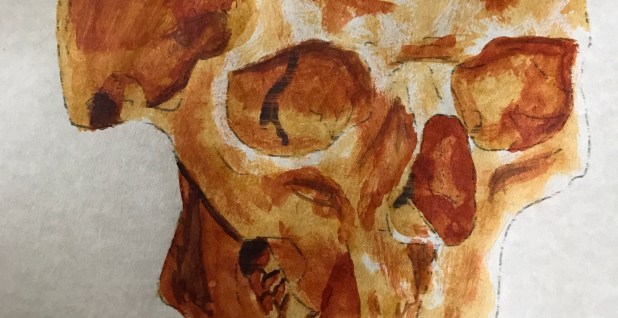
I made this piece in honor of Marsha Linehan, the woman who has saved my life and many others with her creation of Dialectical Behavioral Therapy as a method to treat Borderline Personality Disorder, a disorder that she shares with her patients. It is made with quotes from her textbook and DBT skills. 

When it comes to explaining art, especially if it is fairly plain, you always get the question “how do you know when it’s done?” 

Of course, it’s never done. No such thing. 

But this comes from a basic flaw in understanding the artistic process. 

Artists just fix the most wrong thing they can currently see. Then the next most wrong thing they see after that. So it’s an easy assumption to make that by improving the amount and type of flaws an artist can see, they would improve substantially.

 But it’s not as if the painting has a certain number of flaws and after each one, check mark that part is done. Because every line and color that gets adjusted changes how the eye perceives. And the more flaws that you are attempting to rework at the same time, the more likely you are to become demotivated and just give up. 

This is a perfect metaphor for the process of growth through DBT. Thesis and antithesis reaching synthesis. Followed by re-evaluation. Then do it again. You continue to fix the most wrong thing that you can see. Until… when?

Until the risk of exceeding the limit of your skills is greater than the reward of the fix you are trying to make. “If I push this further am I gonna ruin it?” 

This is likely what people find most frustrating about the first line traditional therapies. The skill gap. Your ability to see flaws will improve before your ability to handle them does. 

This is the opposite in DBT.

Your ability to see flaws and cognitive distortions improves as you begin using skills and gaining experience with them. It is only then then you begin making the connections as to the true sources and solutions of your behaviors.

Those connections may have only traumatized you if you were still functioning at the same level as before. 

You need practice walking up to the line and knowing whether you can take another step or not and you cannot learn that academically. 

You’re gonna ruin a lot of work. Eventually you tune in your sensitivity and awareness so you can spend more time in the safe zone of fixing things before you reach the limit of your skills. That’s when you can actually begin the real and profound work safely and know that wherever you end up going with it, you have the capability and control over what’s directly in front of you to be able to handle. 

I had stopped making art for 10 years after a cruel drawing professor in college. I also was institutionalized 22 times during that decade. That part was more about identity. It was play that developed the confidence and learning that results in me now being introduced as an artist, and as the person that I’m actually comfortable living as day to day. 

Practicing non-judgmentally which gives you the time and experience to develop your own meaningful conclusions, and improving your eye but not practicing systematically, will both allow you to improve. One has gotten you into a productive practice, though, and established a baseline, and done so without relying on installing a harsher critic. 

I lived it before I became it.

And it is only now that I feel safe enough to go deeper.

But it is with a better understanding

And a better mindset.

And now… no one can take it away from me.

See I once thought that the goal was to get good at something. 

Now I realize you only need to be good enough to fix your mistakes to be quite dangerous.

And you’re already ahead of everyone that’s not even trying. 

But is this piece done? 

Not if Marsha Linehan says it isn’t. 

I’ll be fixing it up digitally to give away as a downloadable if she gives permission. 
Dangerous People

Today I went to the Community Mental Health, ready to raise hell(unfortunately she wouldn’t let me record the conversation though and I really believe it should have been), as I had been advised to, and got some differing responses than I did last night at the psychiatric urgent care. They claimed to have never told them that they wouldn’t authorize services, only that I needed to go to an emergency room no matter what. If that was the case, I can’t imagine why personnel from Pine Rest, who are in a private and unconnected system from both CMH and Pivot, would have brought up and mentioned that I had been authorized to go to Pivot once and not showed up. He shouldn’t have known that and would have had to have been told something of the sort for that message to get relayed in any way.

I asked the woman I was working with today to imagine what it was like to already feel like you should die, that you aren’t worth treatment, and hearing that you’re being punitively prevented from seeking it out because you’re bad at treatment. The kind of treatment that you need to get better at the things in life that prevent you from being good at treatment.

She said today that if I had called back last night they would have told me the same thing, just go to an emergency room. And that if anything like that happens again(which she called “basically an ‘f you.’”) to call the CMH directly and get clarification.

Last night, no part of me wanted to call and talk to the on call person who had apparently made that decision about me.

I’ll admit that I’m a vulnerable person. I’m fairly easily manipulated. Easily lied to. Every person on this whole process also has their own motivations and interests in covering their own asses and the ass of the organizations they work for. I don’t know who to trust. I don’t know if I should contact the Pine Rest people and find out the name of the CMH on call person from that night. I don’t know where to go from here.

I do know that I’m in a safe(r) place now. The mental health system is fucked and it’s taken me 10 years in it to learn how to see where the problems are, to advocate for myself. For instance, at my intake today, I was asked to sign a blank belongings inventory, before they had even completed the work of looking through my belongings and listing what would be kept on the sheet. I didn’t do it and it wouldn’t have affected me negatively to sign in advance because I have played the hospital game so many times that I don’t even buy pants with strings in them anymore, but let me tell you, when you are a vulnerable individual, all it takes is just one staff member finding something they like in your stored belongings and “forgetting” to put it on your inventory. A pre-signed empty inventory could be a disaster for someone with, say, a sentimental knife or jewelry. I also had the right to be there while they inventoried my belongings and they didn’t inform me of that or ask.


I guess what I’m saying is that I’ve learned enough now to know that I’m giving up an enormous amount of power and dignity when I make this decision of hospitalization. Every time. Every time is a chance to be re-traumatized or experience something cruel or outlandish and it seems like nearly every experience I’ve had in the mental health system has involved that.


I think a lot of it really feels like gaslighting.

Go to the Emergency Room.

Get stripped of all your belongings. Yes, even your phone. You got people worried about you? Well, they get to leave messages to your locker. You’re a danger to yourself and dangerous people don’t get phones.

Get stripped of your clothes. Sometimes even your underwear. Sometimes they’ll have you do a naked squat to show you aren’t smuggling anything. You’re a danger to yourself and dangerous people don’t get clothes.

Depending on where you are, you’ll be watched non-stop either through the window, a camera, or a security person in the room. If you’re lucky, you might be allowed a family member or friend as a sitter. You will have to be monitored everywhere you go. Sometimes this means bed alarms. This always means someone else in the bathroom with you. You’re a danger to yourself and dangerous people don’t get privacy.

You’ll get to re-explain everything that’s wrong with you at a bare minimum of six times. This means what’s happening in your life, medical background and health management you currently are in, meds, feeeeeeeeeelings and “What brings you in today?” You have to hash out your pain, your struggles, your limitations and weaknesses, again and again and again. Get reminded of how much crap you feel like, again and again and again. To strangers. Anytime they ask. You’re a danger to yourself and dangerous people don’t get personal boundaries.

You’re in gown. In a too small bed. You can see the blood spatter on the blah floral curtain. And the doctors and nurses and phlebotomists and social workers all come in and stand towering over you and imply “I’m sorry that you’re feeling this depressed, but it’s wrong to feel that bad and people aren’t supposed to be like that and we can fix you, we can make you better.”

Ending that sentence was the precise moment that I realized I’m in an abusive relationship with the mental health care system.

Maybe more accurately it makes me realize I think I have a process addiction to mental health care but it just makes me feel so good(when it’s not hurting me).

Frack

A man
once told me
the inside
of my skull
was like
a funhouse
filled with mirrors
so the
slightest
little laser
impulse
of emotion
would
bounce around
and
I r fractured
u refracted
split like concrete
served like pie
little slices
teeny splices
page at a time
all stories are lies

And still…

There was an incredibly powerful exercise that I did once in a group session with other alcoholics and addicts. It was about the first step-admitting you are powerless. It was recommended by one of our peers, who said his sponsor guided him through it. He gave us all an index card and told us to number one through ten, leaving two lines for each number.

Then he said “I want you to think of ten of the worst things you did while you were drinking, and write them down. Leave an empty line.”

Our leader, Bob, was feeling sassy, so he timed people. The first person completed his in 27 seconds. Others needed to think a little harder. I was in the middle of the pack.

Then he gave us the key for the exercise.

After every statement, we had to write “and still I kept drinking.”

We had to confront the fact that not only did we facilitate these terrible experiences, we chose our demon again. And again. And again.

So for me it would start out a bit like:

I broke a goddamn toilet, and still I kept drinking.
I was sleepwalking naked, and still I kept drinking.
I let the horses out in the middle of the night, and still I kept drinking.
And so on.

It occurred to me recently that this same method could be modified a bit for other situations. I thought of my parents, the spiritual abuse they put me through, and how I’d keep crawling back to them.

So here’s another list. Yeah, it’s different, because the first reflects more personal choice rather than something being done to or with you. It was still a key moment for me to process this list, though. I think it’ll help give me strength.

1. They taught me how to tie a noose when I was really young*, and still I gave them more chances.
2. They told me I was getting fat, and still I gave them more chances.
3. They had me work for the family business in a shop from an incredibly young age, and still I gave them more chances.
4. They made me write pages from the Bible every day to improve my handwriting, until I developed carpal tunnel, and still I gave them more chances.
5. They held me to such high standards that it was impossible to ever succeed or feel like I could be good enough, and still I gave them more chances.
6. They stayed close with my exes even though it made me uncomfortable, and still I gave them more chances.
7. They put down my perfectly healthy dog unexpectedly without telling me while I was away in the hospital, and still I gave them more chances.
8. They left bible pages open about raising godly children after finding a dildo at age 16, and still I gave them more chances.
9. They guilt tripped me for how I was making them feel by choosing to live in my car rather than with them during a complicated time, and later gave me a mattress shoved behind a couch as a bedroom, and still I gave them more chances.
10. They refused to let me see a therapist or get medication for my depression, then insisted on a Christian counselor when it became court mandated after my first institutionalization, and had him perform an exorcism on me, and still I gave them more chances.

It was a pretty frequent pattern that I’d get sick of them and run off, or end up in a mental institution. But I always crawled back, and was always made to feel broken and wrong.

The last couple weeks, I kept getting little barbs from my Mom that indicated that she knew about the transition although I hadn’t had the guts to come out directly to them. Things like telling me how I was the feminine version of my dad, or how girly looking my hair was coming along to be, or how “a girl can dress up pretty and wear makeup and heels and have fun but when a boy does it it’s weird.”

It got to the point that I just walked out the door and left their property after she said something like that. Stopped talking to her. I texted her and said if she wanted to talk, I was meeting with my therapist and she could join, so she did.

She claimed she didn’t have a clue about the transition. She said that when she looks at me she sees “a very confused young person.” When my therapist gave me a chance to express how I was feeling, all I could come up with for a minute was “tense,” and she jumped in saying “And I’m devastated.” Not only did she continue to deadname and misgender me after we explained my wishes, she actively tried to correct my therapist and fiance when they were using the right ones. She asked my fiancé if he was okay with this, and after contorting her face in disgust when he said yes, asked “WHY?!?!” When he explained that his love had nothing to do with my gender, she said “Wow, so anybody can do what they want if they love ‘em.”

There’s another therapy session scheduled.

I added to the list number 11. They invalidated my choices about my gender and sexuality.

Any chances from here on out are to be supervised by a professional.

*It actually wasn’t until very recently that I realized this was fucked up. I mentioned something about it in passing on Facebook and a number of friends jumped in saying how gross that it was. I had been under the impression it was fairly normal, like a Boy Scout thing or whatnot.

23 Pills and a Biweekly Injection*

That’s what it takes to keep me in operating condition.

Not particularly fantastic operating condition, either.

I creak, I groan, I piss and moan.

But I’m still alive.

And these *very expensive* pills are to blame for that. They can be a bit of a curse. It’s obnoxious to go pick them up all the time, my insurance doesn’t allow the pharmacy’s prescription syncing service because they hate progress or something. It takes me about an hour and a half for me to watch a comedy special and prepare the next three weeks of pill cases. It’d take less time if I were singularly focused, yes, but I’d also get so angry that I’d probably start chucking pills at passing cars. Truly though, cars don’t pass by my apartment often enough to let out that rage so I might feebly try to anger-juggle the bottles or some shit like that.

I used to swallow pills one at a time.
A few overdose attempts and having a regimen like this managed to train me out of that.

I also used to swallow Cheerios like pills when I was a kid. I’m not exactly sure why I felt I needed the practice, but I can’t argue with the results. I’m a real pro.

My psychiatrist appointment yesterday brought up my starting Testosterone. It all had happened so quickly, that he hadn’t even been informed yet. He was definitely surprised, but also said, “well maybe we’ve hit a root issue here and once you’re further along, we can start to back you off on stuff again.” That’d be nice. Maybe regular human doses and such!

A few months ago I weaned off Abilify because of drowsiness and weight. It went fine for awhile, then I tanked. So we are trying its new big brother, Rexulti, which is more potent so you take a lower dose and get less side effects. It’s also retails at around $1,100.

Yeah, I want off meds. It sucks that I have to take them. However, I have confronted the fact that I do not have a normal brain. I will never be able to be free of them and have a decent quality of life.

I doubt I’d be able to go off them for 6 months and physically survive, actually.

So, 23 pills and a biweekly injection.

I continue into the fray. I depend on them. They are my sword and shield in a harsh forest full of monsters.

When it comes to advocacy and stigma, I won’t say “I am medicated, hear me roar!” I don’t think we need more associations of crazy.

I might say “I am medicated, watch me manage!”


*Some are supplements, and none are fun.

Youthful hopes.

The rubber strap wraps around my arm.

“This will be tight, I’ll loosen it as soon as I can…”

I’ve heard Melissa use that exact sentence probably dozens of times as she starts an IV on someone in the prep room. Melissa is tall and slim, with chin length wavy silver hair and the bluest eyes I’ve ever seen. I can’t help but ask- “So how many times do you think you’ve said that?”

She smiles. “That’s something that I’m gonna ask God when I see him. My husband wants to ask what’s the closest he’s ever been in proximity to buried treasure.”

I smile and take a deep breath as she warns me “Little poke…”

She fiddles with the tape and looks at me before she asks “If you could ask God one question, and he had to give you a straight answer, no comparisons, no parables, just something you could completely understand, what would it be?”

I try to come up with something clever but the phrase “Why me?” pounds through my head over and over, eventually leaking out my tear ducts and my lips.

Her face melts with empathy. “You mean with the struggles you’ve had to deal with?” She asks me my age and tells me that when she was my age she struggled a lot too. “You know, a friend once told me something that I found to be true. There’s people that struggle when they are young, and there’s people that experience their struggles when they get older. You’re just getting yours out of the way. Things will get better.”

Saline drips down my arm. “I sure hope so.”

“I wouldn’t have believed me when I was your age either. But know that there’s hope.”

They wheeled me into the treatment room for my weekly seizure, the ones that feel like hope.